
Deck Cleaning That Won't Raise the Grain
A pressure washer in the wrong hands turns a cedar deck into a fuzzy, splintered mess in about four seconds. The wood looks clean while it's wet, then dries into a surface that catches every bare foot and refuses to hold stain. We clean decks at the pressure the wood can take — and leave them dry, open, and ready for whatever finish comes next.
- check_circle From $105 — flat quote
- check_circle Wood, composite & pavers
- check_circle Stain-ready surface, no raised grain
- check_circle Seattle & the Eastside
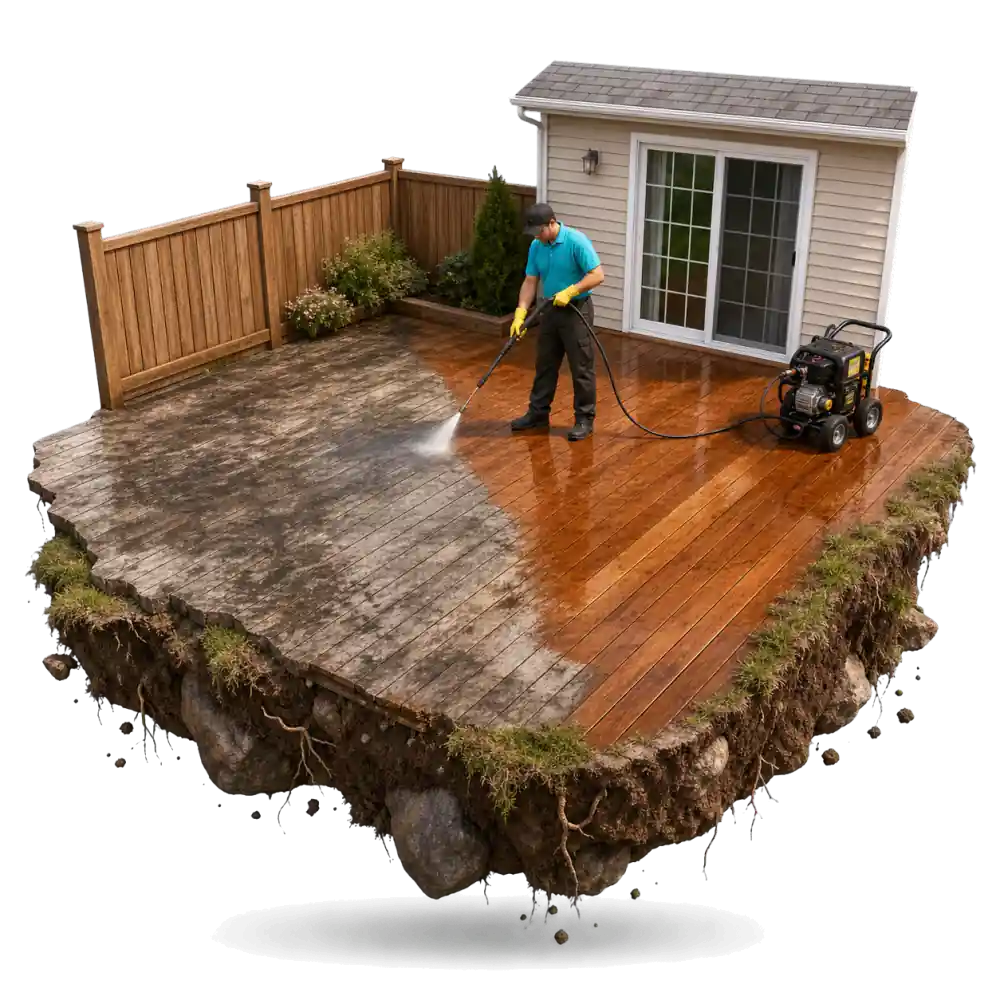
Staining the deck this summer? We've often got a slot this week.
Send your address and we'll check availability and send a quote — usually within 1–2 hours during business hours. Same-day and next-day slots open up often.
- schedule Quote in 1–2 hrs
- event_available Same-day & next-day slots
- call Fast, no-pressure callback
Is It Safe to Pressure Wash a Deck?
It depends entirely on the pressure, the nozzle, and the distance — and that's not a dodge, it's the whole answer.
Wood is soft. A pressure washer running at 3,000 PSI with a narrow tip held close to the board doesn't clean the surface, it erodes it. It tears out the soft spring growth between the harder grain lines, leaving ridges and lifted fibers. That's what "raised grain" means, and once it happens the only fix is sanding the whole deck. Getting the whole home ready at once? House cleaning covers the interior, and deep cleaning the detailed reset.
Done properly, deck cleaning uses:
- check_circle Low pressure — a fraction of what concrete takes
- check_circle A wide fan tip, never a zero-degree jet
- check_circle Consistent distance and motion, always with the grain, never across it
- check_circle Cleaning solution doing the work, not force
Cedar and fir — the two most common Seattle deck woods — are both on the soft end. They need the gentlest approach of anything we clean.
How Much Does Deck Cleaning Cost in Seattle?
Flat pricing by deck size. We have a $150 minimum for a standalone visit — a small deck is best bundled with a driveway or fence.
- Up to 200 sq ft (10 × 20)from $105
- Up to 600 sq ft (20 × 30)from $237
- Up to 800 sq ft (20 × 40)from $323
- Up to 1,000 sq ft (20 × 50)from $399
- Railings and stairs (add-on)from $45
- Deck + Fence bundle10% off both
What moves the price: square footage, wood vs composite, railings and stair count, how long since the last cleaning, and algae or mildew that needs pre-treatment.
Cleaning Before You Stain or Seal
Yes — you have to clean first, and most stain failures trace back to skipping this step or rushing it.
Stain doesn't sit on wood. It soaks in. Anything in the way stops it: mill glaze on new boards, gray oxidized fibers on old ones, mildew, algae, and the remains of the last coat. Put stain over any of that and it beads, blotches, and peels off in sheets within a season.
The sequence that works:
- Clean — remove dirt, mildew, algae, and the gray oxidized layer.
- Brighten — a neutralizing rinse restores the wood's pH after cleaning and reopens the pores. Skipped by almost everyone; it's why some decks take stain evenly and others don't.
- Dry — 48 hours minimum in Seattle, and that means 48 dry hours, not 48 hours on the calendar. Wood at more than 15% moisture won't absorb stain.
- Stain — within about a week, before the surface re-oxidizes.
We do steps 1 and 2 and hand you a deck that's ready for step 4. We'll tell you honestly when it's dry enough, because a stain job that fails after a clean looks like our fault either way.
Planning to stain this summer? Book the cleaning at least a week ahead — Seattle gives you a narrow window of consecutive dry days.
Wood, Composite, and Pavers
Same crew, four different machine settings. Telling them apart is most of the job.

Cedar & fir
Soft, common in Seattle, easiest to damage. Lowest pressure, wide fan, always with the grain. Goes gray from UV, not dirt — that gray comes off with cleaning, not with force.

Pressure-treated pine
Harder than cedar, more forgiving, but its water-repellent finish sheds cleaner and needs more dwell time.

Composite (Trex & similar)
People assume it's bulletproof. It isn't — high pressure permanently scars the embossed grain pattern, and you can't sand it out. It also grows mold in the shaded gaps between boards, which is a cleaning problem, not a pressure problem.
Pavers & stone patios
These take real pressure — the opposite end from cedar. The risk is blowing out the joint sand, which then needs replacing. We work at an angle and re-sand joints when needed.
Why Seattle Decks Go Gray
That silver-gray on an untreated deck isn't dirt, and scrubbing harder won't touch it. It's the wood's surface fibers oxidizing under UV — and Seattle's flat, diffuse light does it just as thoroughly as desert sun, only slower.
Then the damp gets involved. Nine months of moisture, a north-facing yard, and a fir dropping needles year-round give you black mildew spotting on top of the gray. Boards under a railing stay wet longest and go first.
The gray layer lifts off with the right cleaner. The mildew needs treatment, not pressure. Neither one requires replacing a single board — which is what most people assume when they finally look closely.
Deck + Fence: Same Wood, Same Visit
Your fence is almost certainly the same wood as your deck, weathered the same way, and standing about twenty feet from it. The crew and equipment are already at your house — adding the fence costs a fraction of booking it separately.
10% off both when booked together.
Deck Cleaning FAQ
How much does deck cleaning cost in Seattle? expand_more
Is it OK to pressure wash a deck? expand_more
Do you pressure wash a deck before staining? expand_more
How long does a deck need to dry before staining? expand_more
How much does it cost to power wash and stain a deck? expand_more
Can you clean a composite deck? expand_more
Will cleaning remove the gray? expand_more
How long does it take? expand_more
Your Deck Has About Three Dry Months
Cleaning, drying, and staining all need dry weather, and Seattle hands out a narrow window. Decks booked in August get finished; decks booked in October wait until next year. Send us your address and deck size — we'll send a flat quote, usually within 1–2 hours during business hours.
Licensed & insured · Seattle & the Eastside · Low pressure, no raised grain
More Pressure Washing in Seattle
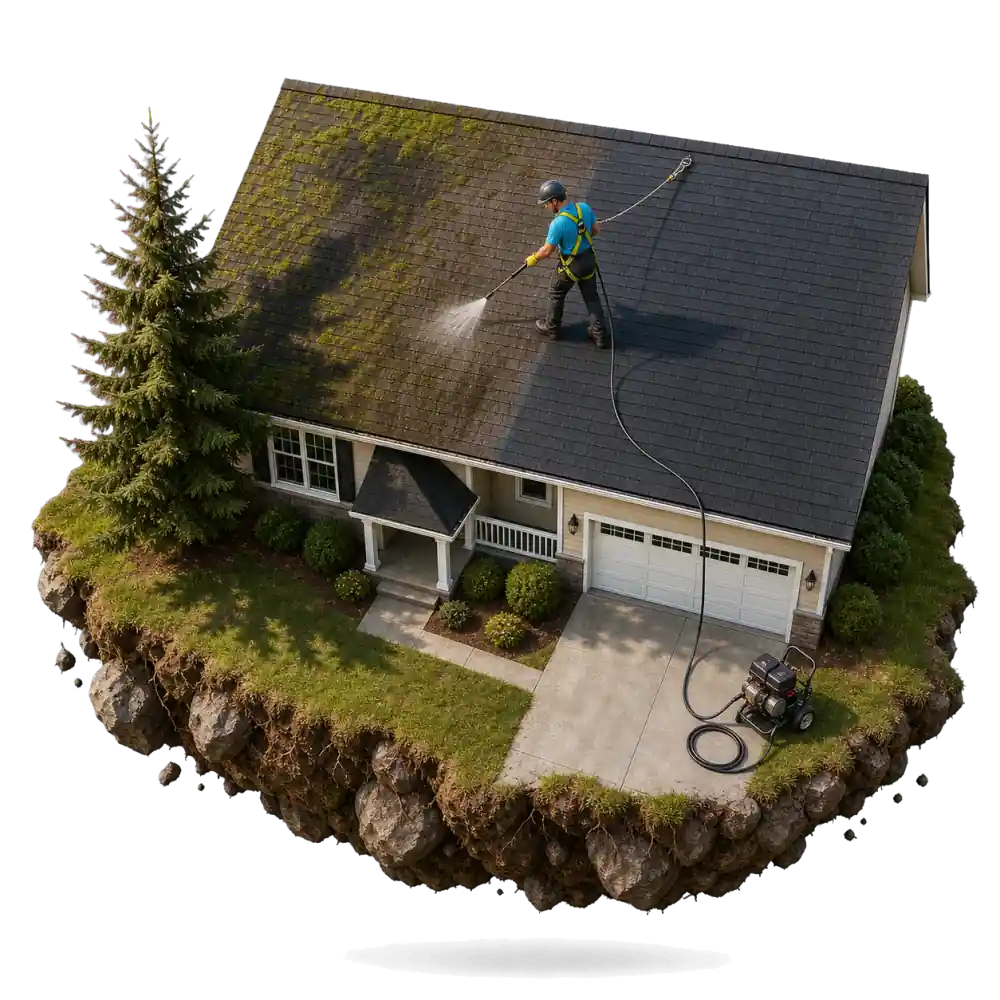
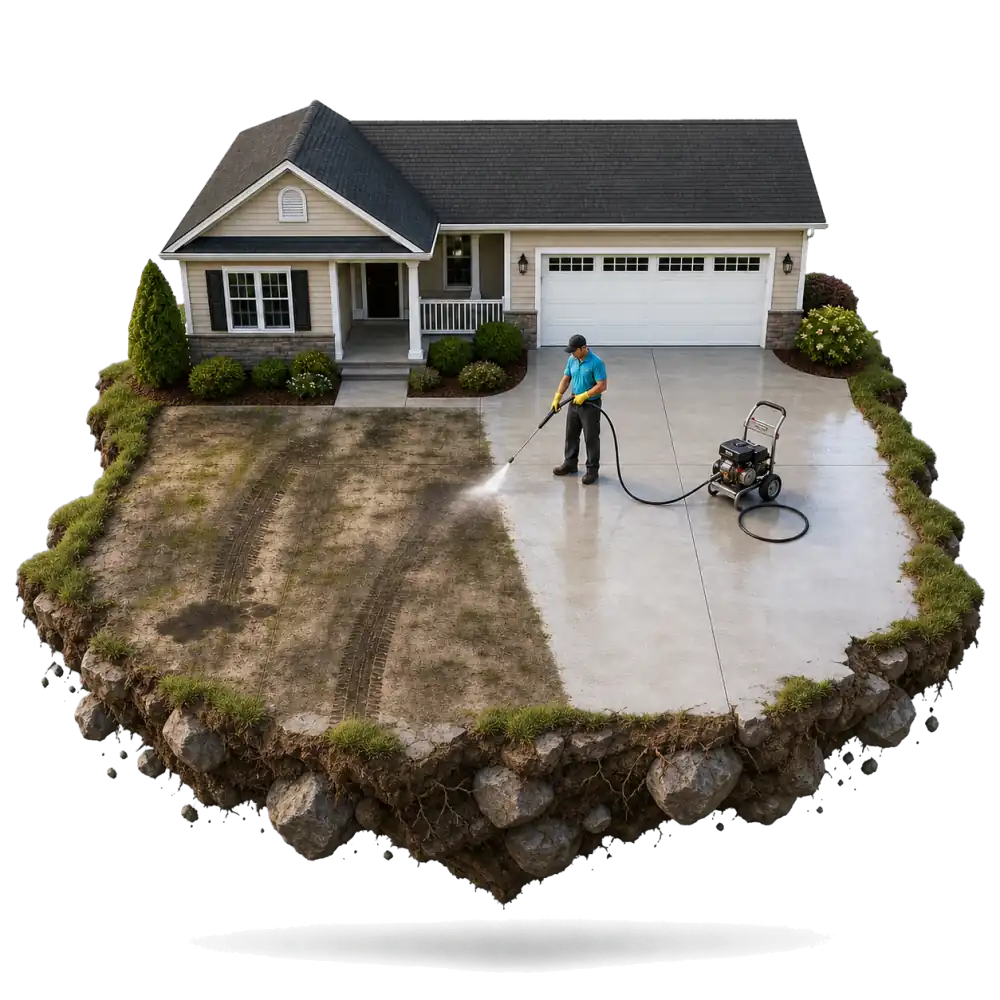
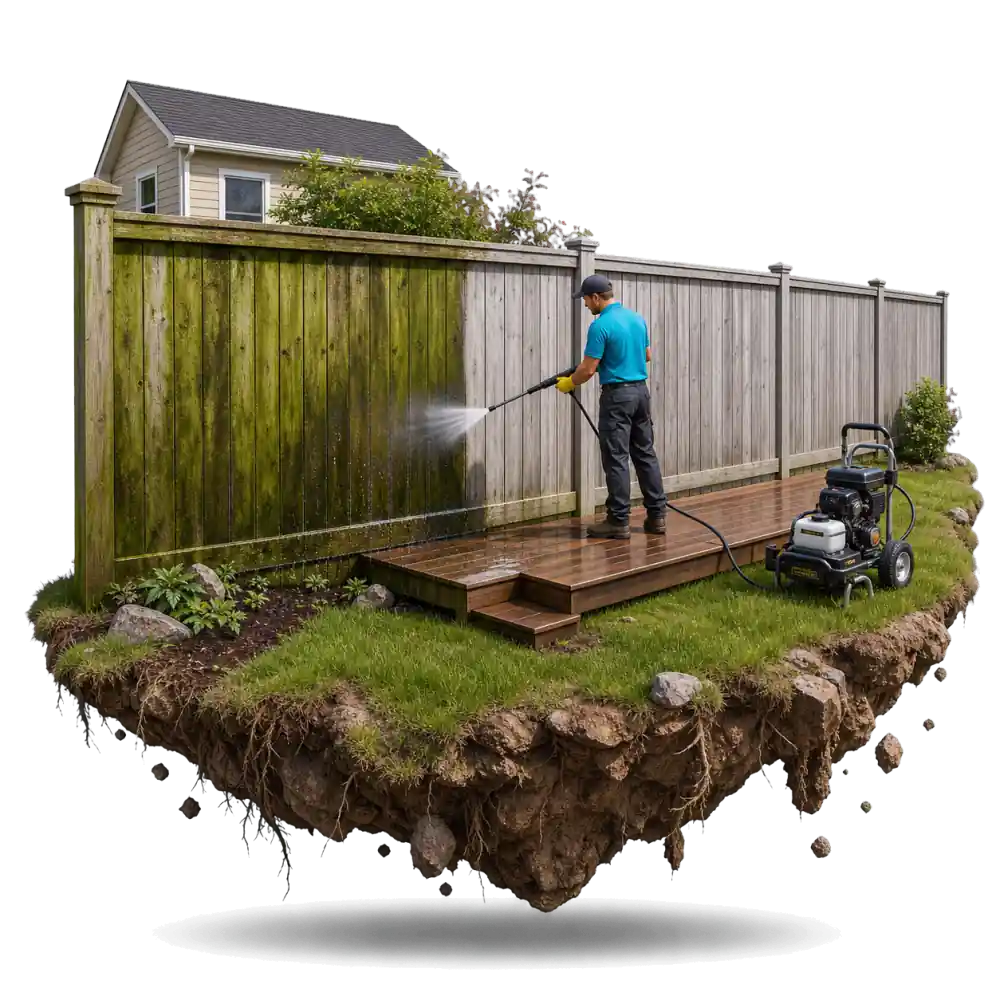
Every exterior surface, matched to the right method. Swipe to explore the rest.


Need the inside done too? We also offer house cleaning in Seattle, deep cleaning, and move-out cleaning.