
Fence Cleaning That Brings the Wood Back
One side of your fence is green. The other side looks fine. You didn't do anything different to either one. That's Seattle — and it's fixable in an afternoon, without splintering the boards or blasting the pickets loose.
- check_circle From $140 — flat quote
- check_circle Wood, cedar & vinyl
- check_circle Green algae, moss & gray weathering
- check_circle 10% off when booked with deck cleaning
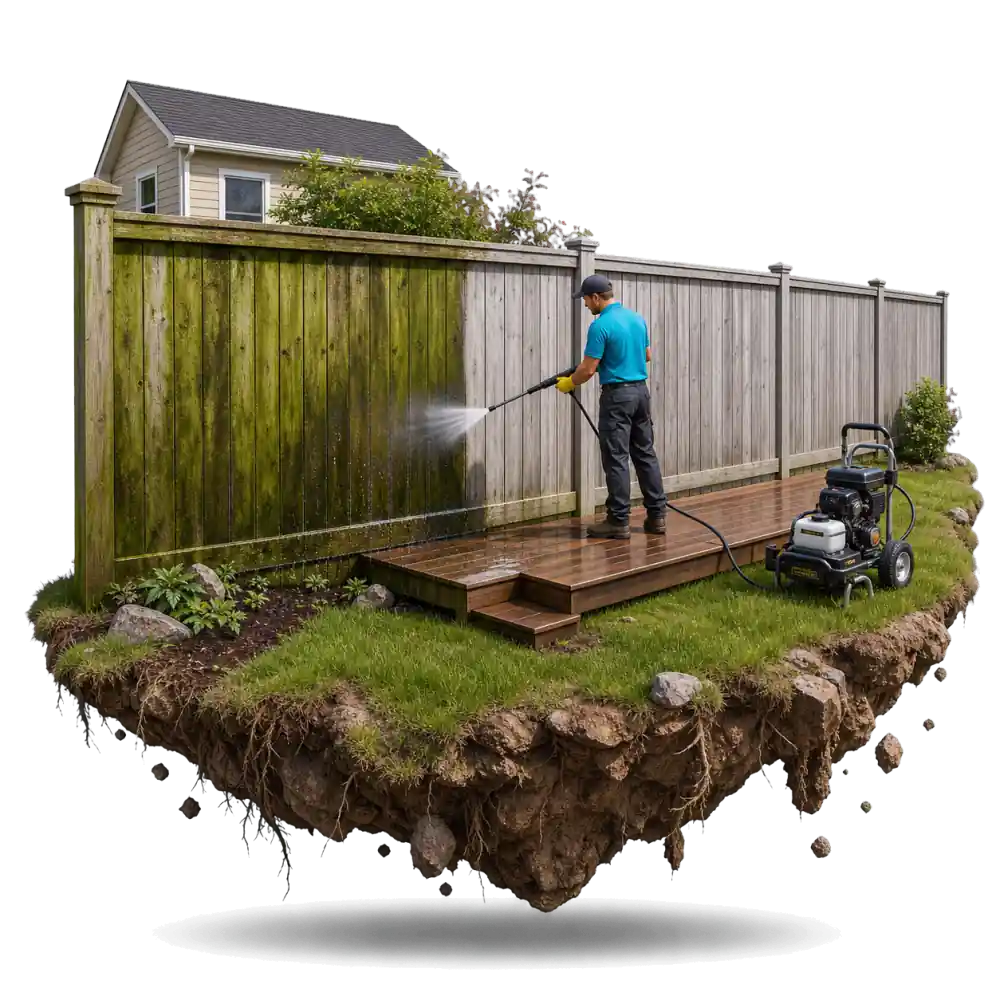
North side of the fence gone green? We've often got a slot this week.
Send your address and we'll check availability and send a quote — usually within 1–2 hours during business hours. Same-day and next-day slots open up often.
- schedule Quote in 1–2 hrs
- event_available Same-day & next-day slots
- call Fast, no-pressure callback
Can You Pressure Wash a Fence?
Yes — but a fence is the least forgiving wood on your property, and here's why.
A deck board is thick, backed by a joist, and lying flat. A fence picket is thin, unsupported between rails, standing vertical, and usually cedar — one of the softest woods sold. Hit it with the pressure you'd use on a driveway and you won't clean it, you'll carve it: furrowed grain, feathered edges, and splinters that stay for years.
The other failure is subtler. Too much pressure at the wrong angle drives water into the end grain at the top of each picket and behind the rails. That water stays. Six months later you have rot starting exactly where nobody looks.
Done properly, fence cleaning uses low pressure, a wide fan tip, cleaning solution doing the work, and passes that always run with the grain and downward — never up under the boards.
How to Wash a Fence
If your fence is short, sound, and you have a Saturday, this is a reasonable job to do yourself. Here's how, properly.
Without a pressure washer
Genuinely the safest method, and for a small fence it isn't much slower.
- Wet the fence and the plants at its base with a garden hose.
- Mix oxygen bleach (sodium percarbonate) with warm water — not chlorine bleach, which strips lignin and turns cedar a permanent dull tan.
- Apply, let it dwell 15 minutes, don't let it dry on the wood.
- Scrub with a stiff nylon brush, working with the grain.
- Rinse from the top down.
With a pressure washer
- check_circle 1,200–1,500 PSI, no more. That's a quarter of what concrete takes.
- check_circle 40-degree fan tip — the white one. Never the zero-degree red tip.
- check_circle Hold 12–18 inches back and keep the wand moving. Stopping burns a mark into the board instantly.
- check_circle Work top to bottom, with the grain, and never spray upward under the boards.
- check_circle Test on the back of a corner picket first. Every fence is different.
Where people ruin fences: chlorine bleach, the red tip, standing still, spraying uphill into the end grain, and starting at the front of the house instead of somewhere nobody will see the mistake.
Why the North Side Goes Green
Look at your fence from the yard. Now walk around it.
The north-facing side is green, mossy, maybe slick to the touch. The south side is dry, gray, and mostly clean. Same fence, same wood, same year.
The north face never sees direct sun, so it never fully dries between rains — and in Seattle, "between rains" is a narrow window for nine months. Algae only needs persistent moisture and shade. It gets both.
Meanwhile the south side is losing its color to UV, oxidizing to the silver-gray everyone assumes is dirt. It isn't; it's the surface fibers breaking down.
So one fence has two completely different problems. Green needs treatment. Gray needs cleaning. Pressure alone solves neither, which is why a fence you blasted last summer looked great in July and green again by November.
How Much Does Fence Cleaning Cost in Seattle?
A standalone fence visit has a $150 minimum. Most people book it alongside a deck or driveway, where it's the cheapest thing on the invoice.
- Up to 100 linear ft, 6 ft tallfrom $140
- 100–200 linear ftfrom $255
- Both sides+40%
- Algae treatment (add-on)from $50
- Deck + Fence bundle10% off both
What moves the price: linear feet, height, one side or both, wood vs vinyl, and how much green growth needs treatment rather than washing.
Wood, Cedar, and Vinyl

Cedar
The Seattle default, and the softest. Lowest pressure of anything we clean. Goes silver-gray from UV; that gray comes off with cleaner, not force.

Pressure-treated pine
Harder, more forgiving, but its water-repellent coating sheds cleaning solution — it needs longer dwell time to work at all.

Vinyl
Doesn't rot or splinter, so people assume anything goes. It doesn't: high pressure at a seam forces water inside the hollow panel, where it sits and grows mold you can see through the vinyl and cannot reach. Vinyl is a soft-wash job, not a pressure job.

Composite & metal
Both fine, both mostly about the right cleaner rather than the right pressure.
Vinyl needs the same gentle method as siding — see our soft washing approach.
Fence + Deck: Same Wood, Same Visit
Your fence and your deck were almost certainly built from the same wood, in the same year, and they've weathered the same nine wet months together. They also need the same pressure, the same solution, and the same crew — who are, at that point, already standing in your backyard.
10% off both when booked together.
Fence Cleaning FAQ
Can you pressure wash a fence? expand_more
How do you wash a fence? expand_more
How do you clean a wood fence without a pressure washer? expand_more
How much does fence cleaning cost in Seattle? expand_more
Why is one side of my fence green and the other isn't? expand_more
Will the green come back? expand_more
Can you clean a vinyl fence? expand_more
Will cleaning remove the gray? expand_more
Do you clean both sides? expand_more
Go Look at the North Side
Seriously — walk around the fence. If one side is green and slick and the other is silver-gray, you're looking at two different problems, and neither of them gets better on its own. Send us a photo and the rough length; we'll send a flat quote, usually within 1–2 hours during business hours. If you have a deck too, mention it — the two together cost less than the two apart.
Licensed & insured · Seattle & the Eastside · Low pressure, no splinters
More Pressure Washing in Seattle
Every exterior surface, matched to the right method. Swipe to explore the rest.
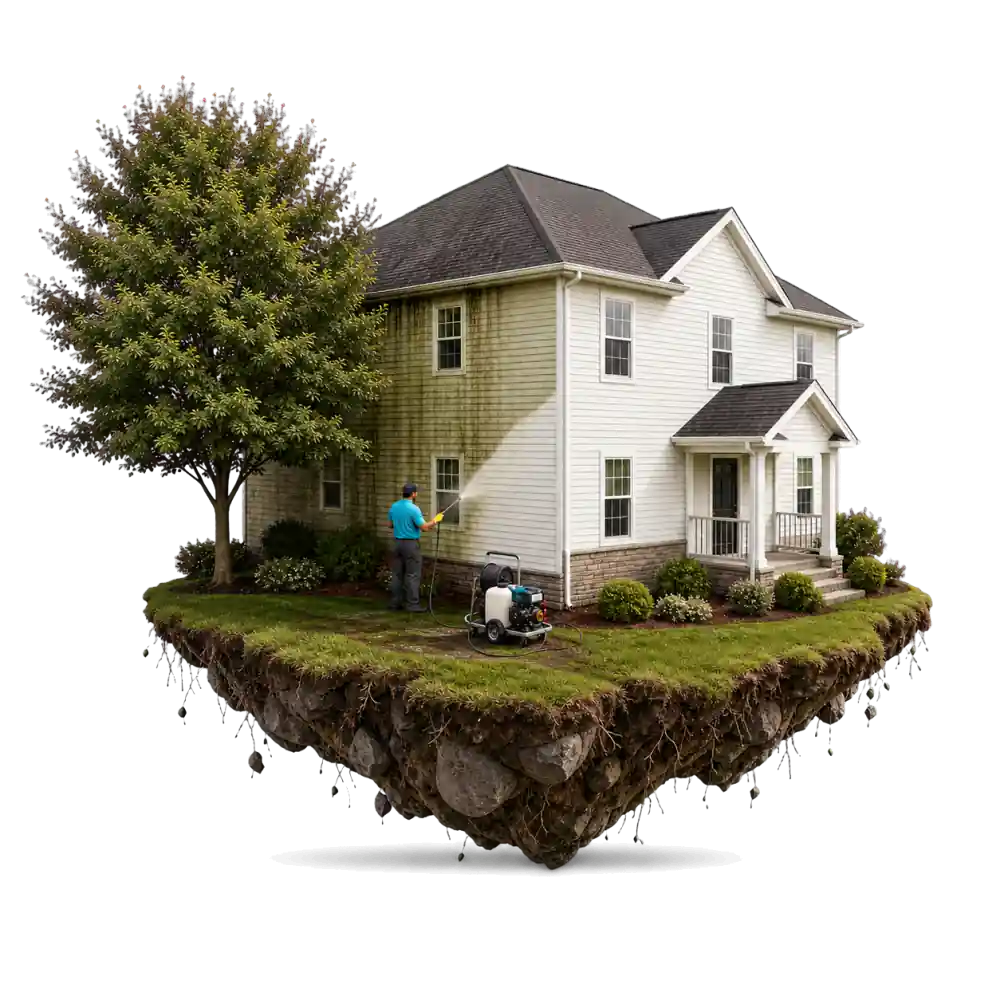
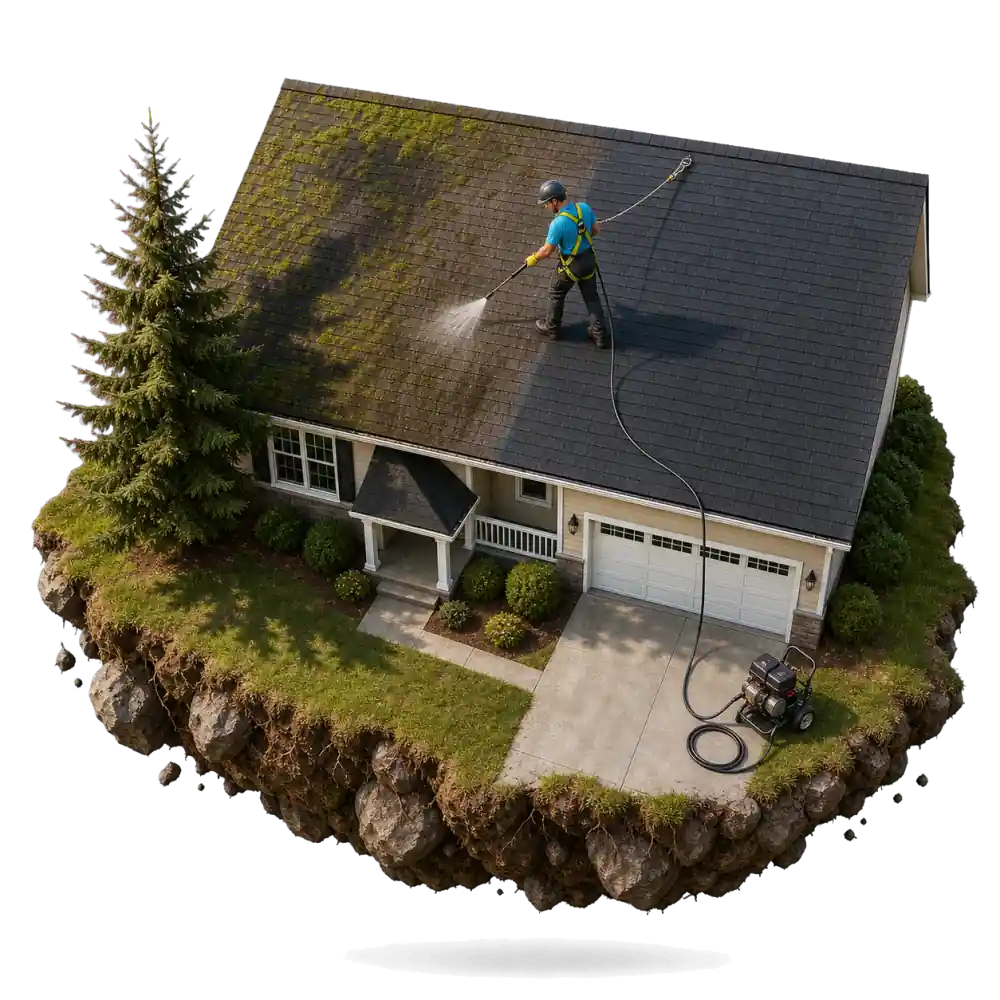
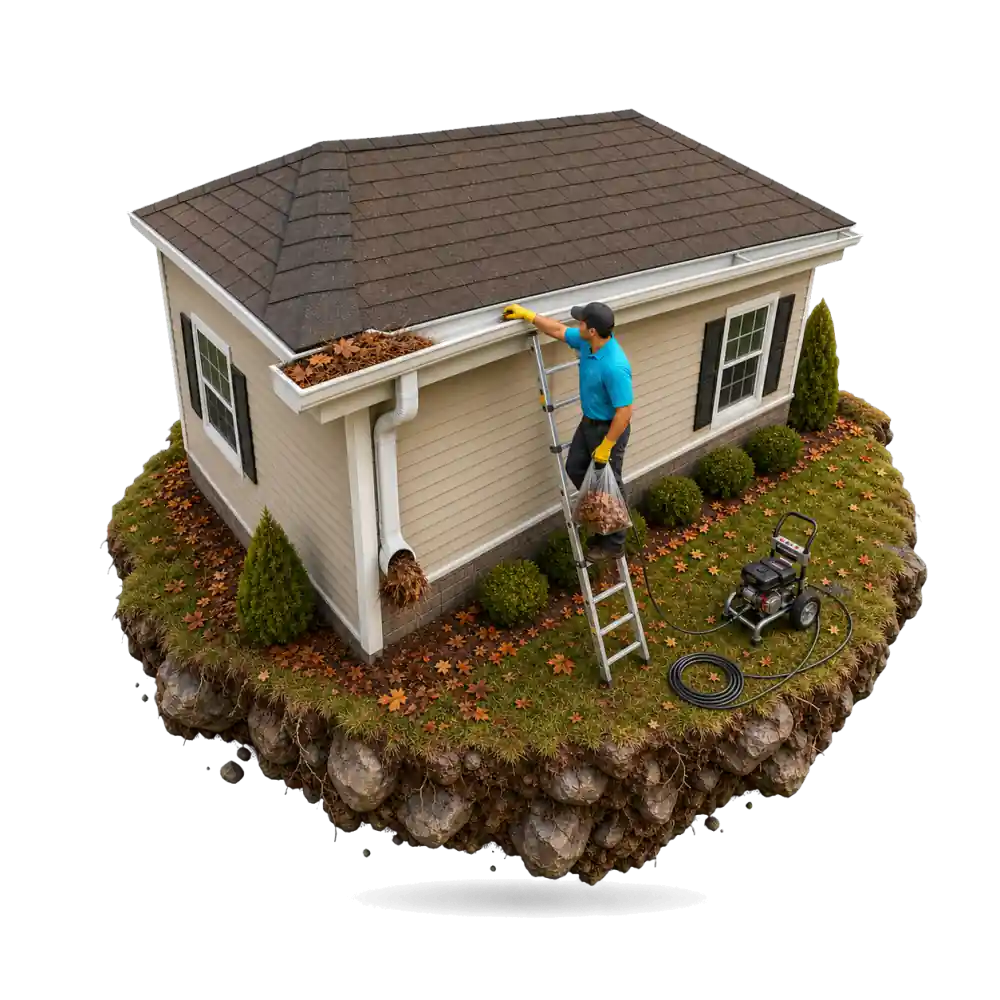
Need the inside done too? We also offer house cleaning in Seattle, deep cleaning, and move-out cleaning.